
It’s Not About You: Father’s Day and Real Leadership
Today, is Father’s Day, so I want to wish the very best to all the dads and the people who are father-figures to everyone out there.
In a blog about leadership, workplace communications and organizational change, it can be particularly complicated. Some of the worst examples of leadership come from people and companies who use the concept of family to justify all kinds of bad behaviors that come from a sense of paternalism—treating employees as less important or like children, command and control, “do as I say,†and my least favorite, trying to engender blind loyalty. I’m not blind to, nor am I supportive of, all the bad outcomes that can come from a family metaphor. Relying on a family dynamic is usually counter-productive in messaging. I mean, if your parent resembles the ones in “The Great Santini†or “Succession,†you might want to avoid that altogether. Literature and real life are filled with bad fathers…and mothers…and pirates. It’s drama for a reason.
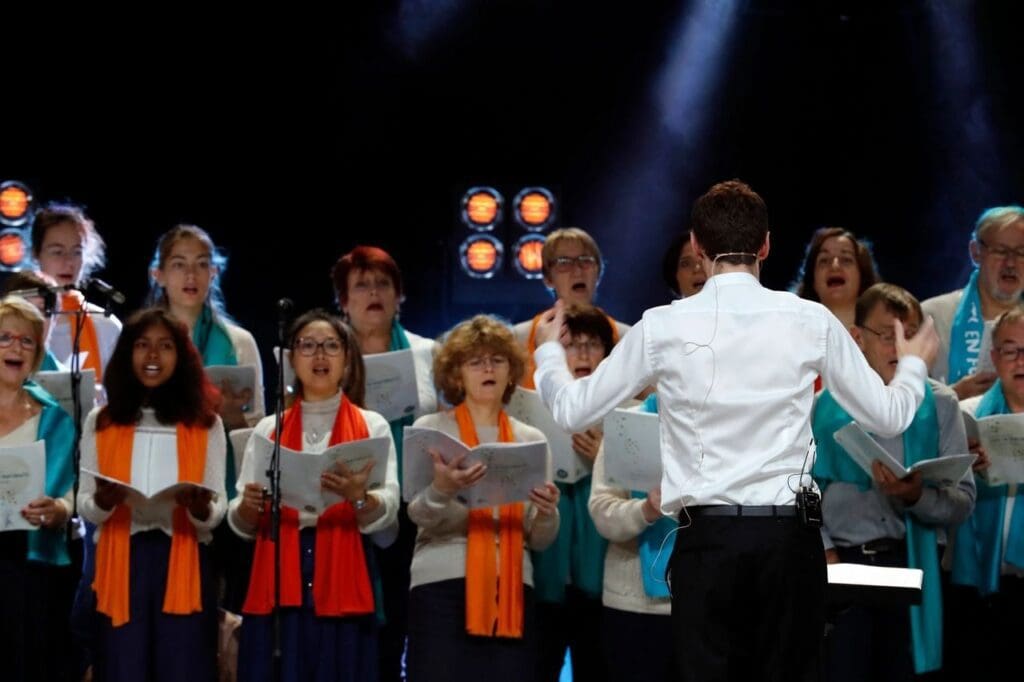
However, as I was thinking this morning, the ideas about the best fathers can be instructive, too. I know I learned a lot about great leadership from my father. As a leader of a farm, he managed employees from the time I was born and believed strongly in matching and growing their abilities to tasks to make them better My dad was also a theater director, choir director, football coach and band leader. At times he was on the rescue squad, elected to local office and taught school. More than all that, he’s mostly remembered as a singer, an individual performer, but that was never his focus. Even after being alone on a stage, afterward, he rarely talked about his performance; he usually talked about the event, the accompanist, or the audience.
When you grow up in a small community, you don’t often have the luxury of waiting for someone else to do something. Someone must lead, or it doesn’t get done. And people must take turns. Today’s leader is tomorrow’s follower or team member—it’s never permanent and the lessons of sharing, listening, and focusing on the outcome are ingrained. Or the system doesn’t work.
Where I see great fatherhood and effective leadership intersect is in this idea: it’s not about you. It’s naïve, but for every great leader I’ve been around, from my dad to many others, what they understand is that ensuring and promoting the success of others IS their role. For a coach, it’s the players. For a choir director, it’s the singers. For a teacher, it’s the students. It’s not selfless, because credit comes to those who guide others to success. But it is a different type of credit. If you want to say, “I alone did that,†it doesn’t bode well for your leadership, but it might be good for your reputation…for a while.
For some of you, especially those in leadership, which might feel like a naïve or outworn concept. We live a world that prioritizes self-promotion, self-absorption, the debate over alternative facts and the “death of expertise,†is celebrated. As a sports fan, the media doesn’t really promote the team as much as they seek out the one team member MOST responsible, which conflates into them winning alone. It’s endemic to promote the individual, mostly because we identify better with characters in storytelling. The heroic ideal, facing the slings and arrows of outrageous fortune, is how we relay information.Â
There are rare occasions when people win alone. Rarer still in companies. So why do we fall into this trap? A leader I respect said to me this week, how can we expect people to collaborate and celebrate shared success or other people’s success when they’re rewarded when they work independently and put in conflict with one another? Show me how I’m measured, and I’ll show you how I perform.
It wasn’t an accident. While the theory can be explained away, the application of performance management and promotion and a culture of competition has led to incredibly corrosive behaviors that elevate and celebrate those who put themselves above the corporation.
Communicators fall into this trap as well, and I know I’m not immune. We spend an inordinate amount of time creating a persona for the leader as infallible, the singular driver of success, the visionary with the idea that inspires people. In some ways it does inspire, but often, the inspiration is a sugar rush. The more it’s built around a person and not shared goals, common culture, or desired outcomes, the more fragile that house of cards will be as time and circumstances and real life inevitably show the cracks of the reputation.
In a climate of people trying to build their own brand, create heroic narratives and show that “they alone†can fix it, I’d like to celebrate the leaders and fathers who see beyond themselves, lead by example, sacrifice for a greater good and a larger accomplishment. Most of all, I’m grateful they take pride in the success of others and not solely themselves.
Happy Father’s Day everyone. I wish for every father, and leader, to take pride when the people that rely on them excel beyond them and become something greater because of their influence.
And here’s my dad…